
Posted: October 12, 2026
By: Editorial Team
LED lighting has made spaces brighter, more efficient, and more reliable. But two fixtures with the same wattage and lumen output can have very different LED color rendering, and that changes how a store or facility looks.
Getting the color “right” affects how people see—and feel about—products, spaces, and brands.
Where color makes a difference
Retail: Produce, apparel, & packaging look more appealing and true to life.
Branded spaces: Logos & colors look consistent from location to location.
Manufacturing: Accurate color matching cuts down on errors & rework.
Start with color temperature
Color temperature (CCT) is the warmth or coolness of the light, measured in Kelvin (K). It sets the overall feel of a space and is usually the first color decision on a project.
2700K–3000K (warm): retail, hospitality, restaurants
3500K–4000K (neutral): offices, schools
5000K (cool): industrial, manufacturing
LED color rendering: How true colors look
Color rendering is how accurately a light shows objects’ real colors, like products on a shelf or clothing on a rack.
Traditional measure
The traditional metric is color rendering index (CRI). On a 0–100 scale, most commercial LEDs fall between 80 and 90. CRI averages how a light renders eight pastel colors, so it misses saturated reds. That’s why specifiers often check R9, a separate score for deep red, alongside it.
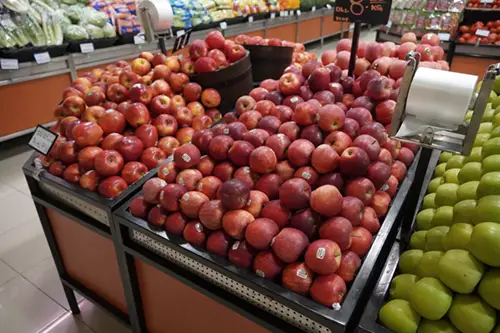
Standard 80 CRI LED
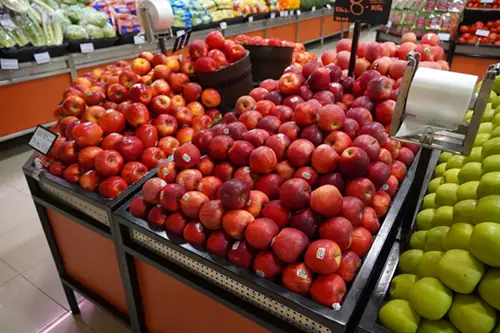
Current’s TriGain® technology
These images show how color perception can change depending on the light source. When the same scene is lit with a light source that increases saturation, especially in the reds, it looks more appealing.
TM-30: A more complete picture
The Illuminating Engineering Society (IES) developed TM-30, a more thorough way to evaluate color rendition. It uses 99 colors across 16 hue groups to test not just how accurate a light is, but which colors it brightens or dulls. If a specific color is central to your brand or products, TM-30 can help find lighting that makes it look its best.
While the amount of data TM-30 produces can be overwhelming, IES created design-intent categories. “Preference Priority Level 1,” for example, means strong overall accuracy, good saturation, and rich reds, a combination people consistently prefer in test studies.
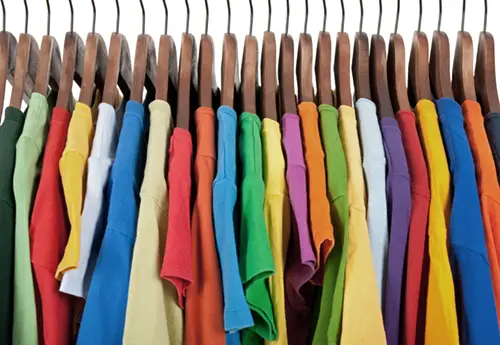
Standard 80 CRI LED
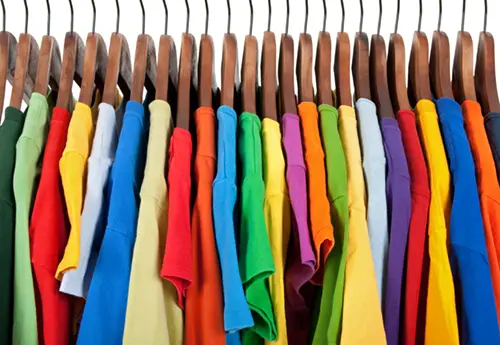
Current’s TriGain® technology
LED color consistency: Making it last
A great color spec only matters if the light holds it. Look for two things:
- Batch-to-batch consistency, so every fixture matches on day one
- Color maintenance over time, so they still match years from now
Heat is one of the biggest factors in how well LEDs hold their color and light output. Matching the product to the application matters, and quality manufacturers can provide the data to back it up.
The bottom line
Watts and lumens will always matter, but in the LED lighting world, it can be hard to stand out. Color rendition and color consistency are important factors that can deliver better outcomes when specified properly.
Loeb is your trusted partner to review your facility’s needs, budget, and timeline and propose LED lighting products, such as Current’s TriGain® technology, to bring out the best in your space and brand. Contact us online or call 800.686.6351 today to speak with a lighting expert.
Related Posts:
Recent Posts


The Importance of Standardizing Commercial Electrical Maintenance Across Multi-Site Facilities
June 23, 2026
Share via:
Read more
Acoustic Lighting Systems: Enhancing Sustainability, Efficiency, & Building Performance
November 17, 2025
Share via:
Read more